Please wait while the formulary information is being retrieved.
Drug overview for EPYSQLI (eculizumab-aagh):
Generic name: ECULIZUMAB-AAGH (e-kue-LIZ-oo-mab)
Drug class: Complement Inhibitors
Therapeutic class: Hematological Agents
Eculizumab, a recombinant humanized IgG2/4 kappa monoclonal antibody, is a terminal complement inhibitor that binds specifically to the complement protein C5.
No enhanced Uses information available for this drug.
Generic name: ECULIZUMAB-AAGH (e-kue-LIZ-oo-mab)
Drug class: Complement Inhibitors
Therapeutic class: Hematological Agents
Eculizumab, a recombinant humanized IgG2/4 kappa monoclonal antibody, is a terminal complement inhibitor that binds specifically to the complement protein C5.
No enhanced Uses information available for this drug.
DRUG IMAGES
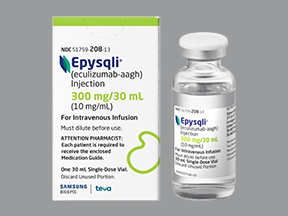 EPYSQLI 300 MG/30 ML VIAL
The following indications for EPYSQLI (eculizumab-aagh) have been approved by the FDA:
Indications:
Atypical hemolytic uremic syndrome
Myasthenia gravis
Paroxysmal nocturnal hemoglobinuria
Professional Synonyms:
Diarrhea-negative hemolytic uremic syndrome
Erb-Goldflam disease
Goldflam's disease
Goldflam-Erb disease
Indications:
Atypical hemolytic uremic syndrome
Myasthenia gravis
Paroxysmal nocturnal hemoglobinuria
Professional Synonyms:
Diarrhea-negative hemolytic uremic syndrome
Erb-Goldflam disease
Goldflam's disease
Goldflam-Erb disease
The following dosing information is available for EPYSQLI (eculizumab-aagh):
No enhanced Dosing information available for this drug.
No enhanced Administration information available for this drug.
| DRUG LABEL | DOSING TYPE | DOSING INSTRUCTIONS |
|---|---|---|
| EPYSQLI 300 MG/30 ML VIAL | Maintenance | Adults infuse 240 milliliters (1,200 mg) over 35 minute(s) by intravenous route every 14 days |
No generic dosing information available.
The following drug interaction information is available for EPYSQLI (eculizumab-aagh):
There are 0 contraindications.
There are 3 severe interactions.
These drug interactions can produce serious consequences in most patients. Actions required for severe interactions include, but are not limited to, discontinuing one or both agents, adjusting dosage, altering administration scheduling, and providing additional patient monitoring. Review the full interaction monograph for more information.
| Drug Interaction | Drug Names |
|---|---|
| IgG Antibodies and Derivatives/Efgartigimod-alfa SEVERITY LEVEL: 2-Severe Interaction: Action is required to reduce the risk of severe adverse interaction. MECHANISM OF ACTION: The neonatal Fc receptor (FcRn) prevents catabolism and mediates recycling of IgG and albumin, which leads to their long persistence in the body.(1,2) Efgartigimod-alfa binds to FcRn and may decrease systemic exposure of other ligands of FcRn, like immunoglobulins and IgG-based antibodies.(3) CLINICAL EFFECTS: The effectiveness of medicines that bind to FcRn may be decreased.(3) PREDISPOSING FACTORS: None determined. PATIENT MANAGEMENT: The manufacturer of efgartigimod-alfa states that efgartigimod-alfa should not be combined with long-term use of FcRn-binding medications. If the medication is essential for the patient, efgartigimod-alfa should be discontinued.(3) DISCUSSION: Clinical drug interaction studies with efgartigimod-alfa have not been performed. Efgartigimod-alfa may decrease concentrations of compounds that bind to the human FcRn.(3) |
VYVGART, VYVGART HYTRULO |
| Crovalimab/C5 Complement Inhibitors SEVERITY LEVEL: 2-Severe Interaction: Action is required to reduce the risk of severe adverse interaction. MECHANISM OF ACTION: Crovalimab is a complement C5 inhibitor which binds to epitopes on C5. Other complement C5 inhibitors such as eculizumab and ravulizumab bind to different epitopes on C5. Use of multiple complement inhibitors may lead to formation of drug-target-drug complexes (DTDCs) which may increase the risk of serious type III hypersensitivity reactions.(1) CLINICAL EFFECTS: Use of multiple complement inhibitors may lead to formation of drug-target-drug complexes (DTDCs) which may increase the risk of serious type III hypersensitivity reactions. Type III hypersensitivity reactions can present as vasculitis, serum sickness, lymphadenopathy with arthralgias, rheumatoid arthritis, or glomerulonephritis.(1) PREDISPOSING FACTORS: None determined. PATIENT MANAGEMENT: The manufacturer of crovalimab states caution is advised when switching patients between other complement C5 inhibitors such as eculizumab or ravulizumab. The formation of drug-target-drug complexes (DTDCs) can occur when switching therapies. DTDCs are expected to be cleared within approximately 8 weeks (with eculizumab) or longer (with ravulizumab). Consider the risks and benefits of the timing of switching therapies with the risk of type III hypersensitivity reactions.(1) Monitor patients closely for signs of type III hypersensitivity reactions.(1) If patients develop a hypersensitivity reaction, for mild or moderate Type III hypersensitivity reactions, administer symptomatic treatment, such as topical corticosteroids, antihistamines, antipyretics, and/or analgesics. For severe reactions, initiate and taper oral or systemic corticosteroids therapy as clinically indicated.(1) DISCUSSION: Clinical drug interaction studies with crovalimab have not been performed. Use of multiple complement inhibitors may lead to formation of drug-target-drug complexes (DTDCs) which may increase the risk of serious type III hypersensitivity reactions.(1) In clinical trials, type III hypersensitivity reactions were reported in 19% of patients who switched from eculizumab or ravulizumab to crovalimab. Also, type III hypersensitivity reactions were documented in 25% of patients who switched from crovalimab to either eculizumab or ravulizumab.(1) |
PIASKY |
| IgG Antibodies and Derivatives/Nipocalimab-aahu SEVERITY LEVEL: 2-Severe Interaction: Action is required to reduce the risk of severe adverse interaction. MECHANISM OF ACTION: The neonatal Fc receptor (FcRn) prevents catabolism and mediates recycling of IgG and albumin, which leads to their long persistence in the body.(1,2) Nipocalimab-aahu binds to FcRn and may decrease systemic exposure of other ligands of FcRn, like immunoglobulins and IgG-based antibodies.(3) CLINICAL EFFECTS: The effectiveness of medicines that bind to FcRn may be decreased.(3) PREDISPOSING FACTORS: None determined. PATIENT MANAGEMENT: The manufacturer of nipocalimab-aahu states that nipocalimab-aahu should not be combined with long-term use of FcRn-binding medications. If the medication is essential for the patient, nipocalimab-aahu should be discontinued.(3) DISCUSSION: Clinical drug interaction studies with nipocalimab-aahu have not been performed. Nipocalimab-aahu may decrease concentrations of compounds that bind to the human FcRn.(3) |
IMAAVY |
There are 2 moderate interactions.
The clinician should assess the patient’s characteristics and take action as needed. Actions required for moderate interactions include, but are not limited to, discontinuing one or both agents, adjusting dosage, altering administration.
| Drug Interaction | Drug Names |
|---|---|
| IgG Antibodies and Derivatives/Rozanolixizumab-noli SEVERITY LEVEL: 3-Moderate Interaction: Assess the risk to the patient and take action as needed. MECHANISM OF ACTION: The neonatal Fc receptor (FcRn) prevents catabolism and mediates recycling of IgG and albumin, which leads to their long persistence in the body.(1,2) Rozanolixizumab-noli binds to FcRn and may decrease systemic exposure of other ligands of FcRn, like immunoglobulins and IgG-based antibodies.(3) CLINICAL EFFECTS: The effectiveness of medications that bind to FcRn may be decreased.(3) PREDISPOSING FACTORS: None determined. PATIENT MANAGEMENT: The manufacturer of rozanolixizumab-noli states that concurrent use with medications that bind to the human neonatal Fc receptor (FcRn) should be closely monitored for reduced effectiveness of these medications. If long-term use of such medications is essential for the patient, consider discontinuing rozanolixizumab-noli and use alternative therapies.(3) DISCUSSION: Clinical drug interaction studies with rozanolixizumab-noli have not been performed. Rozanolixizumab-noli may decrease concentrations of compounds that bind to the human FcRn.(3) |
RYSTIGGO |
| Eculizumab/Intravenous Immunoglobulin Therapies SEVERITY LEVEL: 3-Moderate Interaction: Assess the risk to the patient and take action as needed. MECHANISM OF ACTION: Concomitant use of eculizumab products in patients on intravenous immunoglobulin treatment (IVIg) can reduce eculizumab concentrations.(1-2) CLINICAL EFFECTS: The effectiveness of eculizumab may be decreased.(1-2) PREDISPOSING FACTORS: None determined. PATIENT MANAGEMENT: For patients with generalized myasthenia gravis, the manufacturer of eculizumab states a supplemental dose of eculizumab is required with concomitant use of IVIg treatment. Acute IVIg rescue treatment: No supplemental eculizumab dose needed. IVIg treatment equal to or more frequent than every 4 weeks: -If the most recent eculizumab dose was 900 mg or more, administer a supplemental eculizumab dose of 600 mg at the same scheduled eculizumab dose. -If the most recent eculizumab dose was 600 mg or less, administer a supplemental eculizumab dose of 300 mg at the same scheduled eculizumab dose. IVIg treatment less frequently than every 4 weeks: -If the most recent eculizumab dose was 900 mg or more, administer a supplemental eculizumab dose of 600 mg at the next scheduled eculizumab dose after the last IVIg cycle. -If the most recent eculizumab dose was 600 mg or less, administer a supplemental eculizumab dose of 300 mg at the next scheduled eculizumab dose after the last IVIg cycle. DISCUSSION: Clinical drug interaction studies with eculizumab have not been performed. IVIg treatment may decrease concentrations of eculizumab.(1) |
ALYGLO, ASCENIV, BIVIGAM, CUTAQUIG, CUVITRU, FLEBOGAMMA DIF, GAMASTAN, GAMMAGARD S-D, GAMMAPLEX, HIZENTRA, HYQVIA, HYQVIA IG COMPONENT, OCTAGAM, PANZYGA, PRIVIGEN, QIVIGY, XEMBIFY, YIMMUGO |
The following contraindication information is available for EPYSQLI (eculizumab-aagh):
Drug contraindication overview.
*Patients with unresolved serious Neisseria meningitidis infection.
*Patients with unresolved serious Neisseria meningitidis infection.
There are 2 contraindications.
Absolute contraindication.
| Contraindication List |
|---|
| Meningococcal meningitis |
| Meningococcemia |
There are 1 severe contraindications.
Adequate patient monitoring is recommended for safer drug use.
| Severe List |
|---|
| Infection |
There are 0 moderate contraindications.
The following adverse reaction information is available for EPYSQLI (eculizumab-aagh):
Adverse reaction overview.
Adverse effects reported in at least 10% of patients and at a higher incidence than placebo in the PNH clinical studies include headache, nasopharyngitis, back pain, and nausea. Adverse effects reported in at least 20% of patients (total incidence from 2 studies) in the single-arm prospective aHUS studies include headache, diarrhea, hypertension, upper respiratory infection, abdominal pain, vomiting, nasopharyngitis, anemia, cough, peripheral edema, nausea, urinary tract infections, and pyrexia. h The most frequently reported adverse effect in at least 10% of patients with generalized myasthenia gravis is musculoskeletal pain. The most frequently reported adverse effects in at least 10% of patients with NMOSD include upper respiratory infection, nasopharyngitis, diarrhea, back pain, dizziness, influenza, arthralgia, pharyngitis, and contusion.
Adverse effects reported in at least 10% of patients and at a higher incidence than placebo in the PNH clinical studies include headache, nasopharyngitis, back pain, and nausea. Adverse effects reported in at least 20% of patients (total incidence from 2 studies) in the single-arm prospective aHUS studies include headache, diarrhea, hypertension, upper respiratory infection, abdominal pain, vomiting, nasopharyngitis, anemia, cough, peripheral edema, nausea, urinary tract infections, and pyrexia. h The most frequently reported adverse effect in at least 10% of patients with generalized myasthenia gravis is musculoskeletal pain. The most frequently reported adverse effects in at least 10% of patients with NMOSD include upper respiratory infection, nasopharyngitis, diarrhea, back pain, dizziness, influenza, arthralgia, pharyngitis, and contusion.
There are 23 severe adverse reactions.
| More Frequent | Less Frequent |
|---|---|
|
Anemia Hypertension |
Aspergillosis Cataracts Herpes simplex infection Hypersensitivity drug reaction Hypotension Infection Leukopenia Lymphopenia Viral infection |
| Rare/Very Rare |
|---|
|
Anaphylaxis Cardiomyopathy Cholestatic hepatitis Drug-induced hepatitis Goiter Gonococcal meningitis Hearing loss Meningitis Meningococcemia Septic shock Systemic lupus erythematosus Thrombocytopenic disorder |
There are 55 less severe adverse reactions.
| More Frequent | Less Frequent |
|---|---|
|
Acute abdominal pain Back pain Constipation Cough Diarrhea Fatigue Fever Headache disorder Musculoskeletal pain Myalgia Nausea Pharyngitis Sinusitis Upper respiratory infection Urinary tract infection Vomiting |
Alopecia Anorexia Arthralgia Bronchitis Bruising Cellulitis Cystitis Dizziness Dry skin Dysgeusia Dyspnea General weakness Hematoma Hordeolum Influenza Migraine Muscle spasm Ocular discharge Pain Pain in oropharynx Pruritus of skin Rhinitis Skin photosensitivity Skin rash Stomatitis Tachycardia Vertigo |
| Rare/Very Rare |
|---|
|
Abdominal distension Abnormal hepatic function tests Blurred vision Conjunctivitis Depression Dysuria Gastroesophageal reflux disease Gingival pain Nasal congestion Palpitations Paresthesia Peripheral edema |
The following precautions are available for EPYSQLI (eculizumab-aagh):
Safety and efficacy of eculizumab for the treatment of PNH, myasthenia gravis, or NMOSD have not been established in pediatric patients. A total of 47 pediatric patients 2 months to 17 years of age were included in the principal efficacy studies of eculizumab for the treatment of aHUS. Safety and efficacy of the drug in these pediatric patients were similar to those in adults. Pediatric patients receiving eculizumab should receive appropriate vaccinations for the prevention of Neisseria meningitidis, Streptococcus pneumoniae, and Haemophilus influenzae type b (Hib) infections.
Contraindicated
Severe Precaution
Management or Monitoring Precaution
Contraindicated
| None |
Severe Precaution
| None |
Management or Monitoring Precaution
| None |
Limited data in pregnant women receiving eculizumab have not identified any concerns of adverse developmental outcomes. There are disease-associated risks to the mother and fetus. Untreated PNH in pregnancy is associated with adverse maternal outcomes (e.g., worsening cytopenias, thrombotic events, infections, bleeding, miscarriages, increased maternal mortality) and adverse fetal outcomes (e.g., fetal death, premature delivery).
Similarly, untreated aHUS in pregnancy is associated with adverse maternal outcomes (e.g., preeclampsia, preterm delivery) and adverse fetal/neonatal outcomes (e.g., intrauterine growth restriction, fetal death, low birth weight). In animal reproduction studies, increased rates of developmental abnormalities and increased rate of dead and moribund offspring were observed.
Similarly, untreated aHUS in pregnancy is associated with adverse maternal outcomes (e.g., preeclampsia, preterm delivery) and adverse fetal/neonatal outcomes (e.g., intrauterine growth restriction, fetal death, low birth weight). In animal reproduction studies, increased rates of developmental abnormalities and increased rate of dead and moribund offspring were observed.
Detectable levels of eculizumab have not been found in human milk; however, maternal IgG is known to be present in human milk. There is insufficient information to inform the effect of eculizumab on the breast-fed infant. There are no data on the effects of eculizumab on milk production. Consider the developmental and health benefits of breastfeeding along with the mother's clinical need for eculizumab and any potential adverse effects on the breast-fed child from the drug or underlying maternal condition.
There is insufficient experience in patients 65 years of age or older to determine whether geriatric patients respond differently than younger patients.
The following prioritized warning is available for EPYSQLI (eculizumab-aagh):
WARNING: Eculizumab can lower your body's ability to fight an infection. It can increase your chance of getting a very serious (possibly fatal) brain/spinal cord infection (meningitis). Get medical help right away if you develop any signs of a severe infection (including meningitis), such as nausea/vomiting that doesn't stop, high fever, chills, severe headache, stiff neck, mental/mood changes (such as confusion), eye sensitivity to light.
You should receive the vaccine for meningitis (meningococcal vaccine) at least 2 weeks before receiving this medication. If you have been previously vaccinated for meningitis, ask your doctor if you need to be vaccinated again before receiving this medication. The vaccine will protect most people, but meningitis may occur even in people who have been vaccinated.
You should still watch for signs of meningitis even if you receive the vaccine. Consult your doctor for more details. To receive eculizumab in the United States, you must understand, agree to, and carefully follow the requirements of the REMS Program for this medication. If you live in Canada or any other country, consult your doctor and pharmacist for your country's regulations.
WARNING: Eculizumab can lower your body's ability to fight an infection. It can increase your chance of getting a very serious (possibly fatal) brain/spinal cord infection (meningitis). Get medical help right away if you develop any signs of a severe infection (including meningitis), such as nausea/vomiting that doesn't stop, high fever, chills, severe headache, stiff neck, mental/mood changes (such as confusion), eye sensitivity to light.
You should receive the vaccine for meningitis (meningococcal vaccine) at least 2 weeks before receiving this medication. If you have been previously vaccinated for meningitis, ask your doctor if you need to be vaccinated again before receiving this medication. The vaccine will protect most people, but meningitis may occur even in people who have been vaccinated.
You should still watch for signs of meningitis even if you receive the vaccine. Consult your doctor for more details. To receive eculizumab in the United States, you must understand, agree to, and carefully follow the requirements of the REMS Program for this medication. If you live in Canada or any other country, consult your doctor and pharmacist for your country's regulations.
The following icd codes are available for EPYSQLI (eculizumab-aagh)'s list of indications:
| Atypical hemolytic uremic syndrome | |
| D59.3 | Hemolytic-uremic syndrome |
| Myasthenia gravis | |
| G70.0 | Myasthenia gravis |
| G70.00 | Myasthenia gravis without (acute) exacerbation |
| G70.01 | Myasthenia gravis with (acute) exacerbation |
| Paroxysmal nocturnal hemoglobinuria | |
| D59.5 | Paroxysmal nocturnal hemoglobinuria [marchiafava-micheli] |
Formulary Reference Tool